
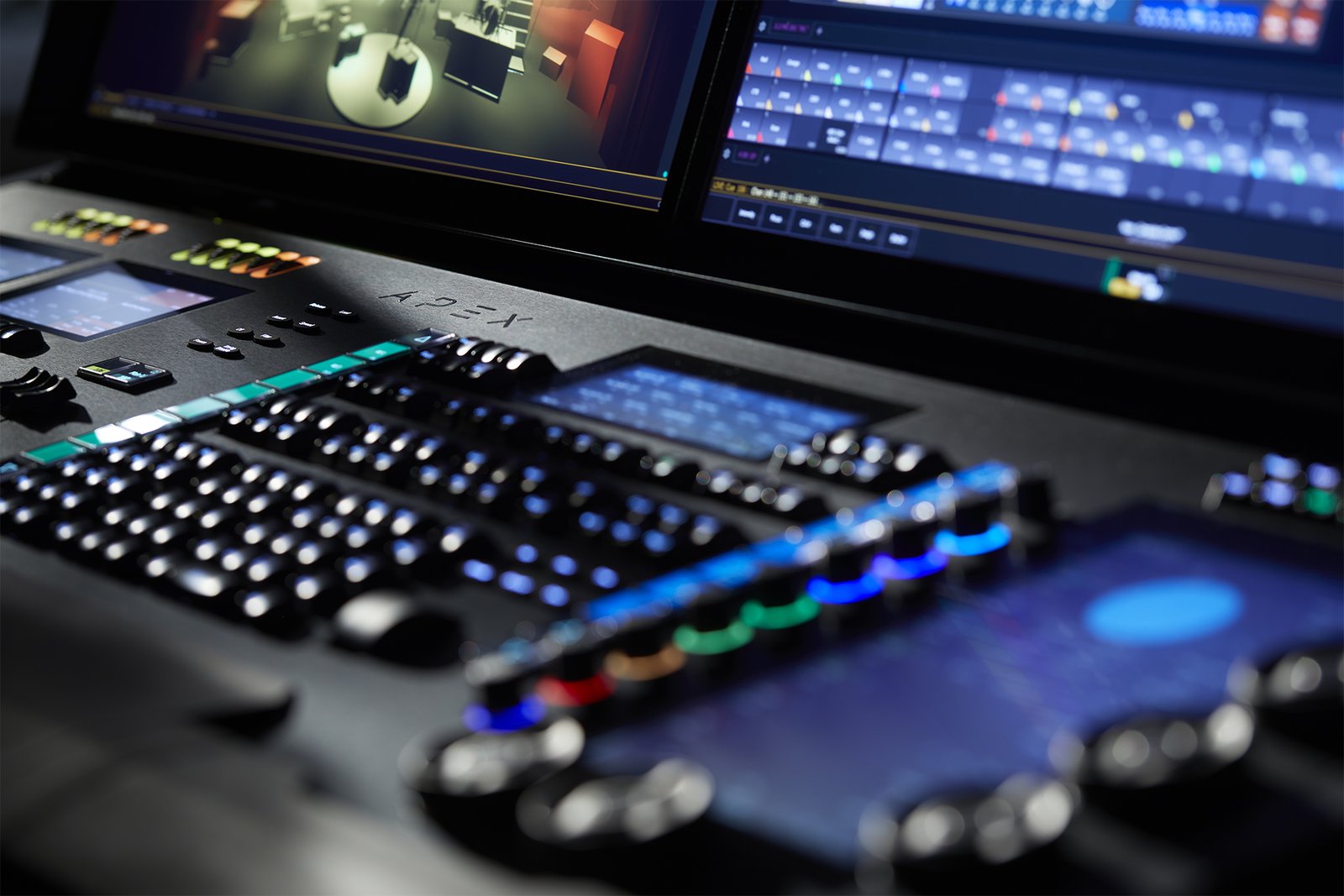
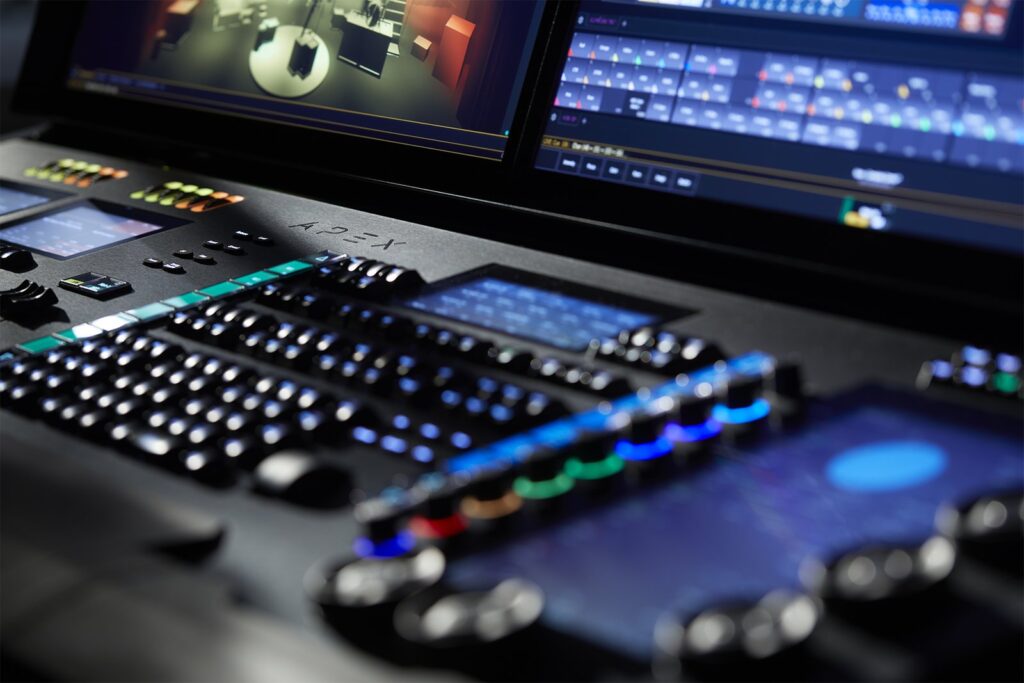
In theatre — especially in the US and in education — one console family rules: the ETC Eos line, spanning the current Element 2, Ion Xe, Gio @5 and Apex (the earlier Eos Ti and original Gio are now legacy models). Built around a command-line, cue-based workflow, it is the desk most lighting designers learn on, and its grip on scripted production is hard to overstate. Here is an honest round-up of what operators actually report, framed as a synthesis of community opinion rather than a hands-on test.
Where these takes come from
A synthesis of recurring opinions across English-speaking communities (r/lightingdesign, ControlBooth) and theatre/education operators. See also our ETC console guide. Everything below reflects what operators consistently say, not first-hand bench testing.
What operators love
The theatre workflow king
The headline is unambiguous: for cue-based theatre, operators say nothing beats the Eos command-line, cue stacks and magic sheets. They describe the workflow as fast, logical and purpose-built for scripted shows — write the show once and play it back identically every night. Designers who have internalized the syntax talk about it the way musicians talk about an instrument they no longer have to think about.
Ubiquity in theatre and education
Eos is the standard in countless theatres and schools, and that comes up constantly as a career argument. Learn Eos and you can walk into almost any theatre gig and know the desk. That portability of skill is, for many operators, as valuable as any single feature — it is the reason so many programs teach it first.
One software, free to learn offline
The Eos software is consistent across all the hardware, from the entry Element up to the Apex, so a show file and a skill set move cleanly across the range. On top of that, the Eos software can be downloaded and used for offline programming on a Mac or PC for free (live output needs a paid ETCnomad USB key plus a Gadget II or gateway), which operators repeatedly call out as a gift for students learning at home.
Support, training and reliability
ETC’s documentation, training resources and support are widely praised, and the desks themselves are described as rock-solid. For institutional venues that cannot afford a failure mid-run, that reliability and the backing behind it are a big part of the appeal.
What operators flag
1. More theatre than busking
Eos is superb for cue-based work, but for on-the-fly busking of EDM sets or bands, many operators find grandMA or ChamSys faster — though they are quick to note Eos is perfectly capable when you know it. It is a matter of what the desk optimizes for.
2. Cost climbs with the range
The Element and Ion are attainable, but the Gio @5 and Apex are serious investments. The platform scales beautifully, and so does the price, so budget expectations should track the model you are eyeing.
3. The command syntax has a learning curve
The command-line approach is powerful but takes time to internalize for newcomers. The payoff is speed once it is second nature; the cost is a genuine ramp before you get there.
4. Free offline software, paid output
Learning on the offline Eos software is free, but real output requires a paid ETCnomad USB key plus a Gadget II or gateway — so budget for the hardware path when you move from practicing to actually driving fixtures.
Who it’s really for
Eos is the choice for theatre, education and cue-based production, and for anyone building a theatre career where it is the expected desk. For touring and festival busking, see our grandMA coverage; for value, ChamSys. See also our theatre console guide.
My honest take
The editorial synthesis is straightforward: if you do theatre, learn Eos. It is the standard, the workflow is unmatched for cues, and the free offline software makes it genuinely easy to start. It is less of a busking desk and the upper models are pricey, but for scripted shows it is the benchmark everyone else is measured against. Weigh the command-line learning curve going in, and the career return on learning it is hard to beat.
FAQ
Is ETC Eos good for theatre?
It is the theatre standard — cue stacks, the command line and magic sheets make it the benchmark for scripted shows, and it is the desk most theatre operators learn on.
Can I learn Eos for free?
Yes — the Eos software is free to download for offline programming on a Mac or PC; the caveat is that real DMX output needs a paid ETCnomad USB key plus a Gadget II or gateway.
ETC Eos or grandMA?
Eos for theatre and cue-based work; grandMA for touring, festivals and busking. The honest answer is to pick by the kind of shows you actually do.
Which Eos console should I start with?
The Element 2 or Ion Xe are the attainable entry points; the Gio @5 and Apex are for larger, higher-budget productions. Because the software is shared, starting small still teaches you the whole platform.
Image: ETC Ion XE20 by Masonvanmeurs, CC BY-SA 4.0, via Wikimedia Commons.
Where to buy : ETC Eos Apex 20
| Retailer | Why | |
|---|---|---|
| Gear4music | Competitive price, European stock, fast delivery | See lighting consoles at Gear4music → |
| Amazon | Fast shipping, used and renewed units | See on Amazon → |
Affiliate links: the price is the same for you, the commission funds our tests. As an Amazon Associate we earn from qualifying purchases.
Read also: grandMA2 vs grandMA3: The Honest Transition Guide · Chauvet DJ Obey Review: The Honest Budget Starter
💡 Essential accessories for your lighting console
This page contains affiliate links. If you buy through them, we may earn a commission at no extra cost to you.
- DMX cable, 5-pin, 5 m : Stairville PDC5CC 5,0 m
- DMX terminator, 5-pin : Stairville DMX Terminator XLR 5-Pol
- DMX splitter, 2 outputs (3/5-pin) : Enttec D-Split (XLR 3 et 5 broches)
- USB gooseneck lamp : Adam Hall SLED 1 Ultra USB