
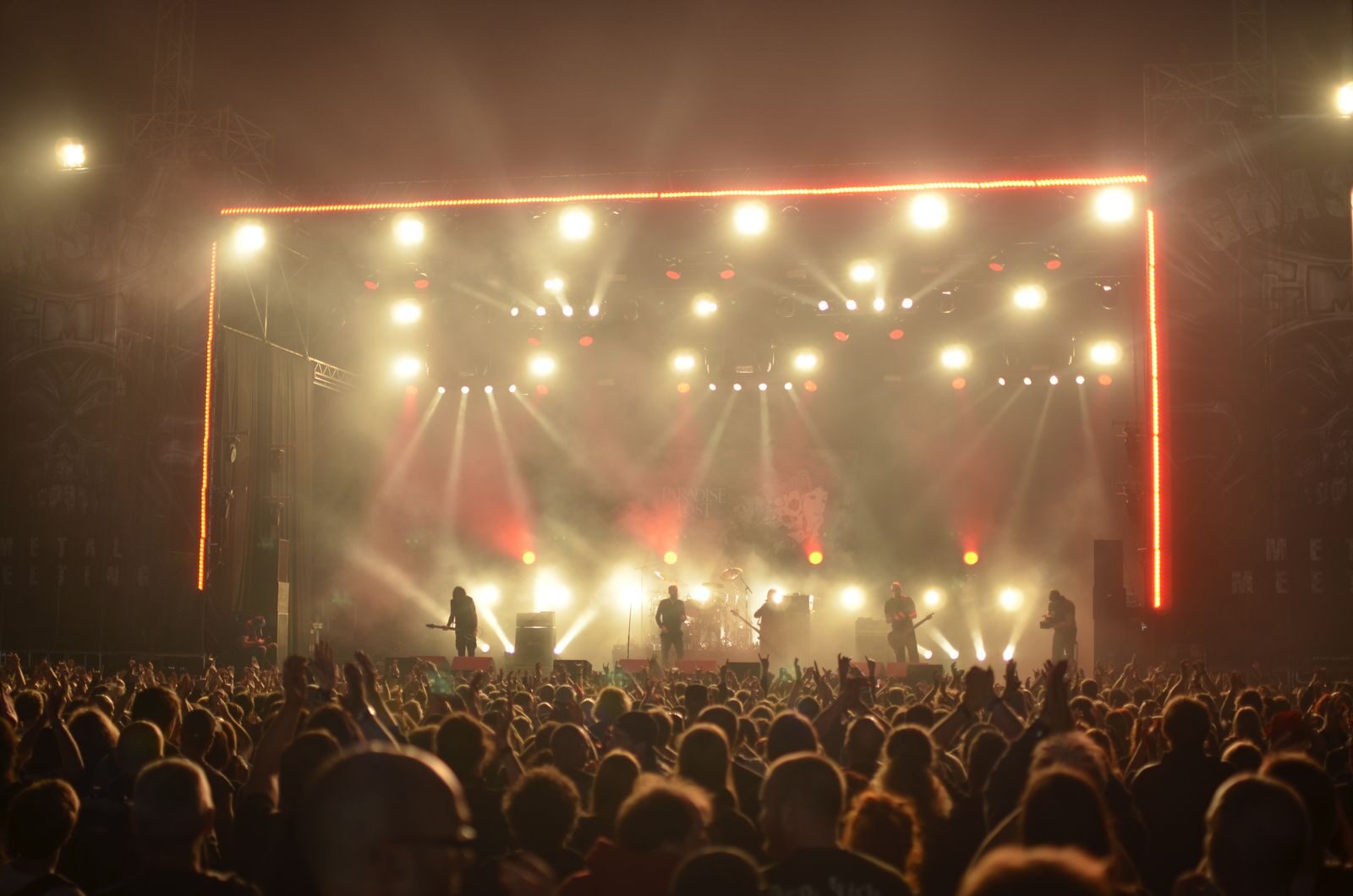
Stage lighting for churches and houses of worship is one of the biggest — and most underserved — corners of the lighting world. Thousands of congregations light a platform every week, yet most of the advice online is written for touring pros, not for a volunteer team on a real budget. This guide covers how to choose a lighting console (or controller) and build a reliable church stage lighting rig, whether you run a small sanctuary or a multi-campus production. For the wider landscape, see our guide to professional DMX lighting controllers.
What makes church stage lighting different
Worship lighting has its own constraints, and they shape every equipment decision. It’s usually run by volunteers who rotate in and out, so the console has to be learnable in an afternoon and forgiving on a Sunday morning. Services repeat week to week, so repeatability matters far more than flashy improvisation — the goal is the same reliable look every service, recalled at the touch of a button. Budgets are real and answer to a board, so value and longevity beat raw specification. And more and more rooms livestream, which adds a camera to the audience and raises the bar on consistent, even light. The right console is one a volunteer can learn quickly and that runs the same cue every Sunday without drama, week after week, regardless of who is at the board.
Choosing a console for a church
- ETC — extremely common in worship; cue-based, volunteer-friendly and rock-solid, with the kind of documentation and support a rotating team relies on.
- grandMA — for larger productions and multi-campus churches that run ambitious, moving-light-heavy services closer to a concert than a service.
If you mostly need straightforward control of dimmers and LED washes, a simpler stage lighting controller may be enough; step up to a full console as your rig grows. The trap to avoid is buying at either extreme — a box too basic to handle the moving lights you’ll add next year, or a flagship desk so deep that volunteers never feel confident on it. Match the console to the fixtures you actually run and to the people who will operate it, and lean toward a platform whose skills transfer upward so a bigger room later doesn’t mean starting over.
Building the rig (on any budget)
A church stage lighting setup pairs the console with LED fixtures, washes and key light for the platform and the stream. You can start small and expand — the console you pick should grow with you. In practice, front key light for faces (especially for the camera) is the foundation, with washes to color the stage and backlight to separate people from the background. Prioritize even, flattering coverage of the people on the platform before you invest in effects, because a clean image of a speaker or worship leader is what the room and the stream notice first. A modest, well-focused rig on a repeatable console beats a pile of fixtures no volunteer can drive, so build in layers and let each addition earn its place.
Consoles that fit a church budget (prices checked, October 2026)
- Zero 88 FLX S24, around €1,760: cue lists, automatic RDM patching, 48 fixtures, learnable in an afternoon. Our pick for services with fixed looks. See the FLX owner review.
- ChamSys QuickQ 10+, around €2,220: touchscreen, one universe plus network, show files that move to any MagicQ later. See the QuickQ owner review.
- ETC ColorSource 20: Eos logic simplified, 40 fixtures, the natural choice in an ETC-equipped room. See the ColorSource owner review.
- Wolfmix W1 MK3, around £690: for a worship band that improvises rather than runs cues, with generated effects and no computer. See our Wolfmix review.
Lighting for the livestream
The camera changes the priorities. Where the human eye is forgiving, a camera exposes uneven coverage, harsh shadows and color casts mercilessly, so consistent front light and controlled color temperature matter more than dramatic looks. A programmable console pays off here in a specific way: it lets you record camera-friendly states as cues and recall them identically every service, so the stream looks the same whether your best volunteer is in the booth or it’s someone’s first Sunday. Getting even key light on faces, keeping the platform brighter than the background, and avoiding wild color shifts mid-service will do more for stream quality than any single fixture purchase.
FAQ
What’s the best lighting console for a small church?
One a volunteer can run confidently — favor ease of use and reliability over raw power, and pick a platform with good support and documentation so a rotating team can lean on it. In practice: Zero 88 FLX S24 or ETC ColorSource 20 for cue-based services, ChamSys QuickQ 10+ if the team may grow into MagicQ.
Do we need a console if we livestream?
Consistent, repeatable lighting makes a stream look far better, and a programmable console pays off quickly by recalling the same camera-friendly states every service regardless of who’s operating.
Should we start small or buy for the future?
Start with a rig and console sized to what you run today, but choose a platform whose skills and files scale upward — that way expanding the rig or moving to a bigger room later doesn’t mean retraining every volunteer from scratch.
Photo credit: Pexels
Where to buy
| Retailer | Why | |
|---|---|---|
| Music Store ChamSys QuickQ 10+ | Competitive price, European stock, fast delivery | Check price at Music Store → |
| Music Store Vari-Lite (Zero 88) FLX S24 | Competitive price, European stock, fast delivery | Check price at Music Store → |
| Thomann ETC ColorSource 20 | Reference price, 3-year warranty, pro stock in Europe | Check price at Thomann → |
| Gear4music Wolfmix W1 MK3 | Competitive price, European stock, fast delivery | Check price at Gear4music → |
| Amazon | Fast shipping, used and renewed units | See on Amazon → |
Affiliate links: the price is the same for you, the commission funds our tests. As an Amazon Associate we earn from qualifying purchases.
Read also: Essential accessories for your lighting console · Flight case for a lighting console: how to choose
💡 Essential accessories for your lighting console
This page contains affiliate links. If you buy through them, we may earn a commission at no extra cost to you.
- Dust cover : ETC Dust Cover ColorSource 40
- DMX cable, 5-pin, 5 m : Stairville PDC5CC 5,0 m
- DMX terminator, 5-pin : Stairville DMX Terminator XLR 5-Pol
- DMX splitter, 2 outputs (3/5-pin) : Enttec D-Split (XLR 3 et 5 broches)
- USB gooseneck lamp : Adam Hall SLED 1 Ultra USB